
What We Solve


01 Energy & BESS Integration
Storage Becomes More Valuable When It Becomes Part of the System
Battery Energy Storage Systems should not operate as isolated energy
assets.
QinnoSys integrates BESS with charging infrastructure, local loads,
generation, power-conversion systems, and supervisory platforms to
create coordinated energy environments.
Our integration architecture can support:
BESS monitoring and control
PCS, BMS, and EMS integration
Site energy coordination
EV charging and BESS interaction
Load and demand management
Energy telemetry and historical analysis
Remote supervision
Multi-system protocol integration
The objective is to transform storage from a standalone asset into an active component of the site's energy architecture.
For larger deployments, QinnoSys software can provide the integration
and data foundation required for more advanced energy-management and
grid-participation strategies.


02 EV Infrastructure & Network Integration
From Individual Chargers to Coordinated Infrastructure
Operating EV infrastructure involves much more than connecting chargers
to a server.
QinnoSys provides the software and integration architecture required to
connect chargers, stations, users, payments, operators, and external
systems within a unified operational environment.
Solutions can include:
Multi-vendor charger integration
OCPP infrastructure
Centralized network supervision
Charging-session management
Dynamic pricing and scheduling
Fleet and depot integration
Payment-system integration
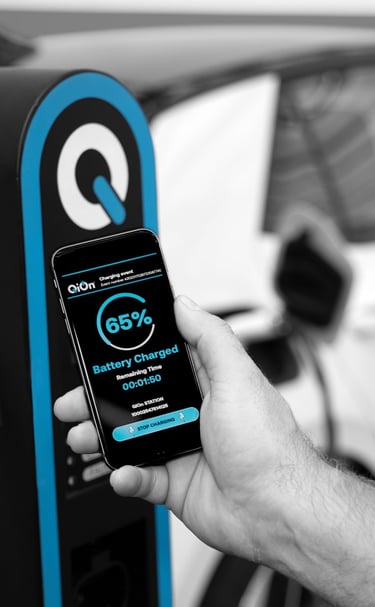
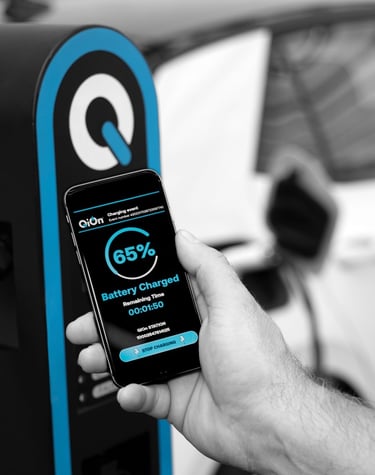
Mobile and web customer interaction
Kiosk and attended-station operations
APIs for external systems
Local and remote diagnostics
QinnoSys architectures are designed to scale from individual locations
to distributed charging networks while maintaining consistent
operational control.


03 Grid & Distributed Energy Intelligence
04 Resilient & Offline Infrastructure
Coordinating Energy Across Assets, Sites, and Networks
As energy infrastructure becomes increasingly distributed, centralized
monitoring alone is no longer sufficient.
QinnoSys develops architectures capable of coordinating information and
control across BESS, charging infrastructure, local generation, site
loads, and distributed energy assets.
Depending on the project architecture and regulatory environment,
solutions can support:
Energy dispatch and coordination
Demand and load management
Distributed asset aggregation
Grid-event response
Forecasting and optimization
Frequency and voltage-support strategies
Ancillary-service integration
Virtualized energy-resource coordination
Historical and real-time energy intelligence
Centralized software, local control, and edge intelligence can work
together so that decisions occur at the appropriate level of the
infrastructure.
Connectivity Should Enhance Infrastructure, Not Define Whether It Works
Energy and charging infrastructure frequently operates in environments
where Internet connectivity cannot be guaranteed.
QinnoSys designs systems that can maintain selected operational
capabilities through local computing, decentralized communications,
and controlled synchronization.
Solutions can combine:
Local station operation
Edge processing
Peer-to-peer communications
Local transaction retention
Offline charging workflows
Local tariff and configuration replication
Store-and-forward data synchronization
Multi-path communications
Recovery and reconciliation after connectivity restoration
These architectures are particularly relevant for remote locations,
industrial environments, temporary infrastructure, large charging sites,
and operations where service continuity is critical.
05 Payment & Customer Experience
Connectivity Should Enhance Infrastructure, Not Define Whether It Works
Energy and charging infrastructure frequently operates in environments
where Internet connectivity cannot be guaranteed.
QinnoSys designs systems that can maintain selected operational
capabilities through local computing, decentralized communications,
and controlled synchronization.
Solutions can combine:
Local station operation
Edge processing
Peer-to-peer communications
Local transaction retention
Offline charging workflows
Local tariff and configuration replication
Store-and-forward data synchronization
Multi-path communications
Recovery and reconciliation after connectivity restoration
These architectures are particularly relevant for remote locations,
industrial environments, temporary infrastructure, large charging sites,
and operations where service continuity is critical.
06 Smart City & Specialized Integrations
Energy Infrastructure Does Not Exist in Isolation
QinnoSys develops integration architectures for projects where charging
and energy systems must interact with broader digital infrastructure.
Applications can include:
Smart-city platforms
Municipal infrastructure
Public transportation
Parking systems
Fleet operations
Marine and port environments
Industrial sites
Temporary and mobile infrastructure
External enterprise platforms
Specialized data and control systems
Through APIs, protocol translation, edge computing, and modular software
components, QinnoSys can connect energy infrastructure with the systems
already operating around it.